How I helped one baby reach functionally clear skin at her nineteen-week review
…without guessing her treatment direction from the rash alone.
Learn why similar-looking eczema can call for completely different Chinese medicine treatment directions, without collecting another “try this, try that” list.
It's two in the morning. Your baby is scratching. You're awake with them, wondering whether tomorrow should bring another cream, another test or another change to what you eat.
“It's the gut.” “It's the skin barrier.” One parent's answer contradicts another's. Their certainty doesn't tell you what fits your child.
Chinese medicine begins with a different question: What pattern does this child's whole picture suggest?
The answer matters because different patterns lead to different treatment principles. Before adding another recommendation, it helps to understand how that decision is made.
This guide explains the distinction, follows a clinical example and shows what a full pattern interview is designed to investigate. If you want help beginning that process, I offer a free thirty-minute call and access to the full interview, assessment and pattern education.
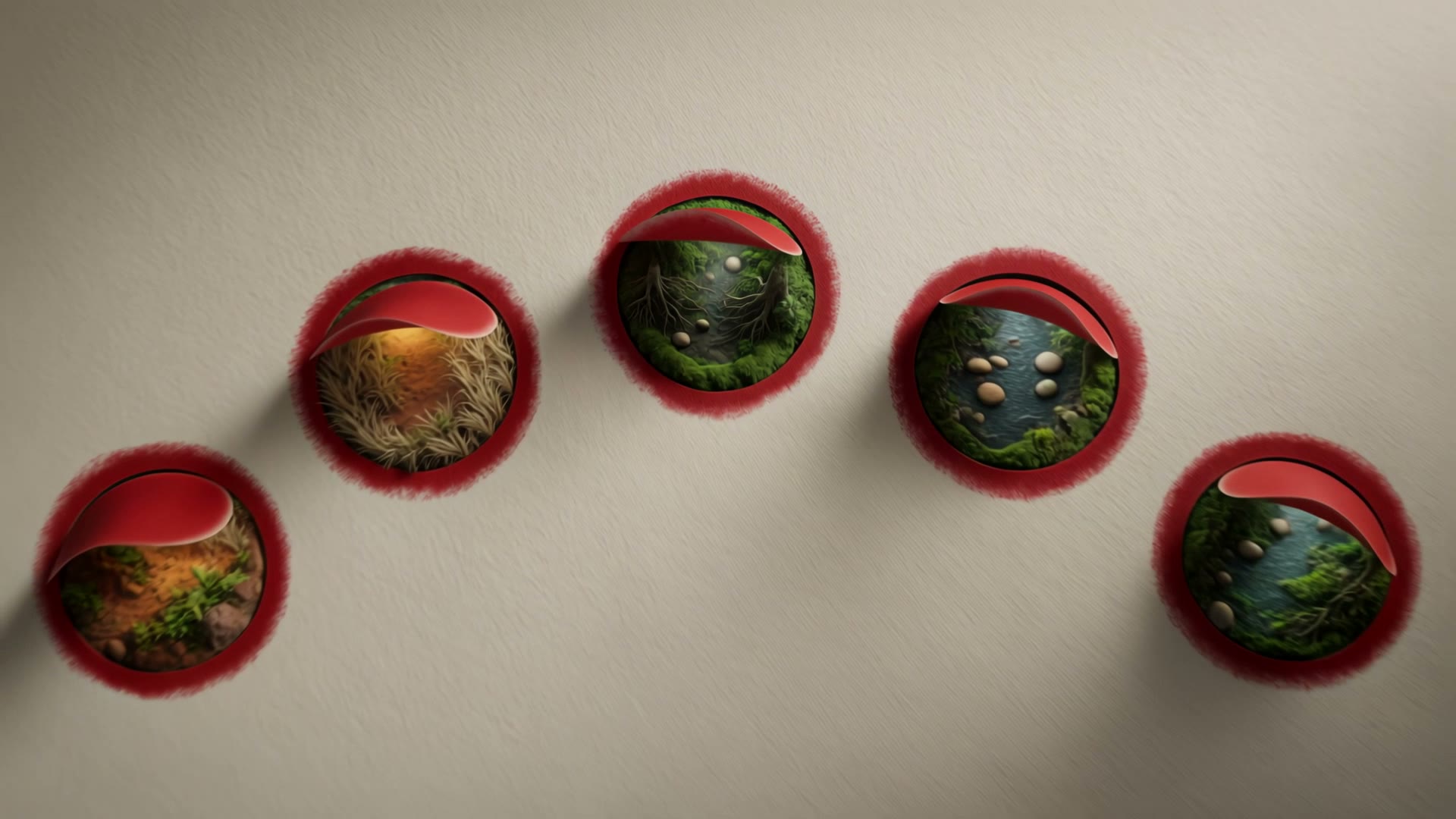
First, a family behind the question
A baby I helped, whom we call Poppy, had red, oozing, crusted eczema. She scratched until she bled. Sleep was disrupted for her and her mother.
Her family had tried prescribed topicals, dermatology, a maternal elimination diet and other creams. Flares kept returning.
We built an individualized plan, watched the response and changed the plan as needed. At her documented nineteen-week review, her skin was described as functionally clear. A brief flush with heat remained, rather than the earlier oozing picture.
That is one family's experience. It doesn't establish the time another child will need or show that any single part of care caused the result.
The useful question is what guided the plan, and what told us when it needed to change.
Earlier in care
Red, oozing, crusted eczema. Scratching and disrupted sleep.
During care
An individualized plan, observation and adjustment.
Nineteen-week review
Described as functionally clear, with a brief flush with heat remaining.
“Eczema” names the condition. A pattern guides the TCM direction.
Advice that says “it's the gut,” “it's the skin barrier,” or “it's the nervous system” can leave you hunting for one explanation that will settle everything.
Chinese medicine asks a different first question: what pattern of disharmony best explains the signs together? It considers the skin, digestion, temperature, sleep and how things change. The pattern is a synthesis of relationships, rather than another name for a single hidden cause.
Heat, Dampness, deficiency and Dryness are traditional pattern concepts. They describe different aspects of a presentation and may occur in combination. They are not simply alternative names for the same rash.
| An illustrative treatment principle | What that principle is intended to address within TCM |
|---|---|
| Clear Heat | A presentation assessed as involving Heat |
| Resolve Dampness | A presentation assessed as involving Dampness |
| Nourish Blood and moisten Dryness | A presentation assessed as involving Blood Dryness |
| Support deficient digestive function | A presentation in which that functional weakness contributes to the working pattern |
These are examples of treatment principles, not instructions for choosing herbs for a baby. The assessment has to establish which principles fit, how they combine and what needs priority.
Consider five fictional presentations. A hot, red flare prompts questions about Heat. Prominent oozing prompts questions about Dampness. Longstanding dry, thickened skin prompts investigation of a chronic Dryness picture. Skin changes with bloating and loose stools bring digestive function into the inquiry. A dry baseline with a new red, wet flare requires attention to what is longstanding and what has just changed.
These are examples of different questions and priorities, not five diagnostic boxes. The full history and contradictory observations still matter.
Two children can therefore have similar-looking skin but need different TCM directions. Two children who look different may share an aspect of their pattern. A photo or a single symptom cannot settle the whole assessment.
Same skin description. Different questions.
Explore two fictional histories. These are teaching examples, not diagnostic rules.
History A: digestive changes
Loose stools and bloating began before the skin flare.
What to investigate next
Timing, whether changes happen together, and other observations that support or contradict a digestive-function pattern.
History B: comfortable digestion
Digestion is consistently comfortable and regular.
What to investigate next
What else distinguishes the presentation? The skin description alone cannot decide which pattern fits.
Compare the whole picture.
Ask what fits, what doesn't, and what needs another question.
Dry skin can be part of a picture involving Dampness
Leo, whose mother is Vy, had dry, flaky skin. But his history also included bloating after meals, variable stools and a puffy tongue with a white coating.
His working Chinese medicine assessment included Spleen Qi deficiency, Dampness, Heat and Blood Dryness.
In this vocabulary, Spleen refers to a traditional functional system concerned with processing food and fluids. It is not a diagnosis of disease in the anatomical spleen. Dampness does not mean every part of the body must visibly look wet.
The dry skin mattered. It did not cancel the digestive observations.
That is the difference between noticing a symptom and investigating a pattern. The question “wet or dry?” starts the inquiry. It doesn't finish it.
During care, Vy reported less itching, softer skin and being able to watch Leo sleep peacefully. “We're actually seeing his baby skin,” she said. Those are her observations during care, separate from what the traditional pattern terms mean.
Think about the whole garden
If a plant's leaves are struggling, you examine the leaves. You also investigate its soil, water and growing conditions.
That is a useful analogy for the Chinese medicine distinction between root and branch. The branch is what is showing up, such as itchy, inflamed skin. The root is the underlying traditional pattern being investigated. Care may need to address both, and priorities may change.
The analogy is a way to explain the approach. It isn't evidence that a particular treatment will work.
A useful question changes the next decision
Consider a fictional example. Two children have red, wet patches.
One parent describes loose stools and bloating that began before the skin flare. The other describes consistently comfortable, regular digestion.
Those answers don't diagnose either child. They create different reasons to investigate a digestive-function pattern.
The next question should help distinguish the remaining possibilities. When did the changes begin? Do they happen together? What supports the working interpretation? What doesn't fit?
An assessment should be able to explain why it is asking. Your answers should influence what happens next.
Why I built EczemaBaby
After studying systems engineering at the University of Florida, I worked in software at SpaceX and in machine learning engineering. Years of pushing left me burnt out, chronically tired and relying on Adderall to do my work.
An herbalist introduced me to a different framework for understanding my exhaustion. I followed his advice, took the herbs he recommended and changed my diet. About a year later, I had more energy, felt more emotionally steady and no longer needed Adderall to work.
That was my personal experience with several changes over time. It made me want to apply my engineering skills to this kind of medicine.
I later built functional-medicine AI at HealthcareAgents.com in San Francisco. During a ten-day Vipassana retreat, I decided to go all in on bringing Chinese medicine and AI together. That commitment became EczemaBaby.
What the AI interview is designed to do
The interview gathers your child's story, considers plausible Chinese medicine patterns and asks follow-up questions intended to distinguish them. As answers arrive, the working picture can change.
The resulting explanation should connect the pattern to the observations that support it. A complicated name without an explanation is not enough.
You don't need to arrive knowing Chinese terminology. Bring what you have noticed, what you have tried and what still doesn't make sense.
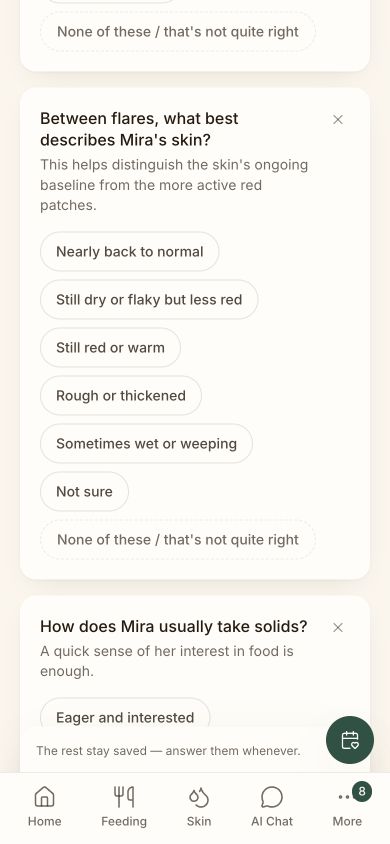
Asking what the skin is like between flares adds context to what happens during a flare. This is one question in an assessment, not a diagnosis or proof of the system's accuracy.
Chinese medicine has an established clinical tradition of pattern differentiation, and the Chinese University of Hong Kong describes applying it to eczema. Research has tested particular herbal treatments. In one placebo-controlled study of eighty-five children, a specific formula improved quality of life and reduced topical steroid use, while eczema severity did not differ significantly between groups. A framework, a study, an individual case and a software demonstration provide different kinds of information. They should not be confused.
Begin with a free conversation
Book a free thirty-minute call with me. I'll hear what's happening, explain the process and help you get started in the app.
You receive the full pattern interview and assessment, the resulting explanation and educational AI chat about your child's pattern. The interview can continue after our call; it doesn't have to fit into thirty minutes.
A free place to begin. A separate choice about care.
Included free
Interview, assessment and pattern education
Optional paid care
Personalized protocol and treatment support
| Included in the free experience | Separate paid care |
|---|---|
| Thirty-minute conversation and help getting started | Personalized treatment protocol |
| Full pattern interview and assessment | Individual treatment instructions |
| Explanation and educational chat about the pattern | Ongoing treatment support and adjustment |
If personalized care looks relevant, I may explain that option on the call. You can decide whether it fits. Buying it isn't required to receive the free assessment and education.
You can keep collecting general recommendations. Or you can begin an investigation of your own child's picture, with help understanding the process.
You don't have to decide everything today. Bring your child's story and the questions you want answered.