How I helped one baby reach functionally clear skin at her 19-week review
A full guide for parents of babies with eczema — without treating every child’s eczema the same way.
Essay · Weston Willingham · · 13 min read
At two in the morning, another recommendation isn't enough
"Try this. Try that. It's the gut. It's the skin barrier. It's the nervous system."
Your child is awake scratching. You're awake with them. The next day brings another cream to consider, another food to question, another explanation that sounds convincing until it conflicts with the last one.
You have probably worked hard to understand this. You notice changes other people miss. You remember the difficult nights and what happened before a flare.
What you want is a direction you can trust enough to follow. Why this approach? Why these steps? What do we do if the picture changes?
Chinese medicine approaches those questions through pattern differentiation. It examines the skin alongside the child's wider presentation, then uses the working pattern to guide treatment.
This guide explains what that means, why it can be more complex than wet versus dry, and how you can begin a full EczemaBaby AI pattern interview and assessment for free.
The family behind the nineteen-week result
One baby I helped, whom we call Poppy, had red, oozing, crusted eczema. She scratched until she bled. Her sleep and her mother's sleep were disrupted.
Her family had already tried prescribed topicals, dermatology, a maternal elimination diet and other creams. Flares were still returning.
We built an individualized plan and adjusted it during care. At her July review, about nineteen weeks after her recorded intake, her skin was described as functionally clear. A brief flush with heat remained, rather than the earlier red, oozing presentation.
That recorded review is the result in this article's title. It describes one child's course of care, rather than a promised schedule for another child.
A second family illustrates why individualization matters. Vy came to me about her toddler, Leo, whose skin was dry and rough, with patches at his wrists, elbows and behind his knees. Itching interrupted his nights.
During care, she described less itching, softer skin and being able to watch him sleep peacefully.
"His skin is like so soft again. We're actually seeing his baby skin."
An improvement photo can give you hope. Understanding the decisions behind the care helps you judge whether an approach deserves your attention.
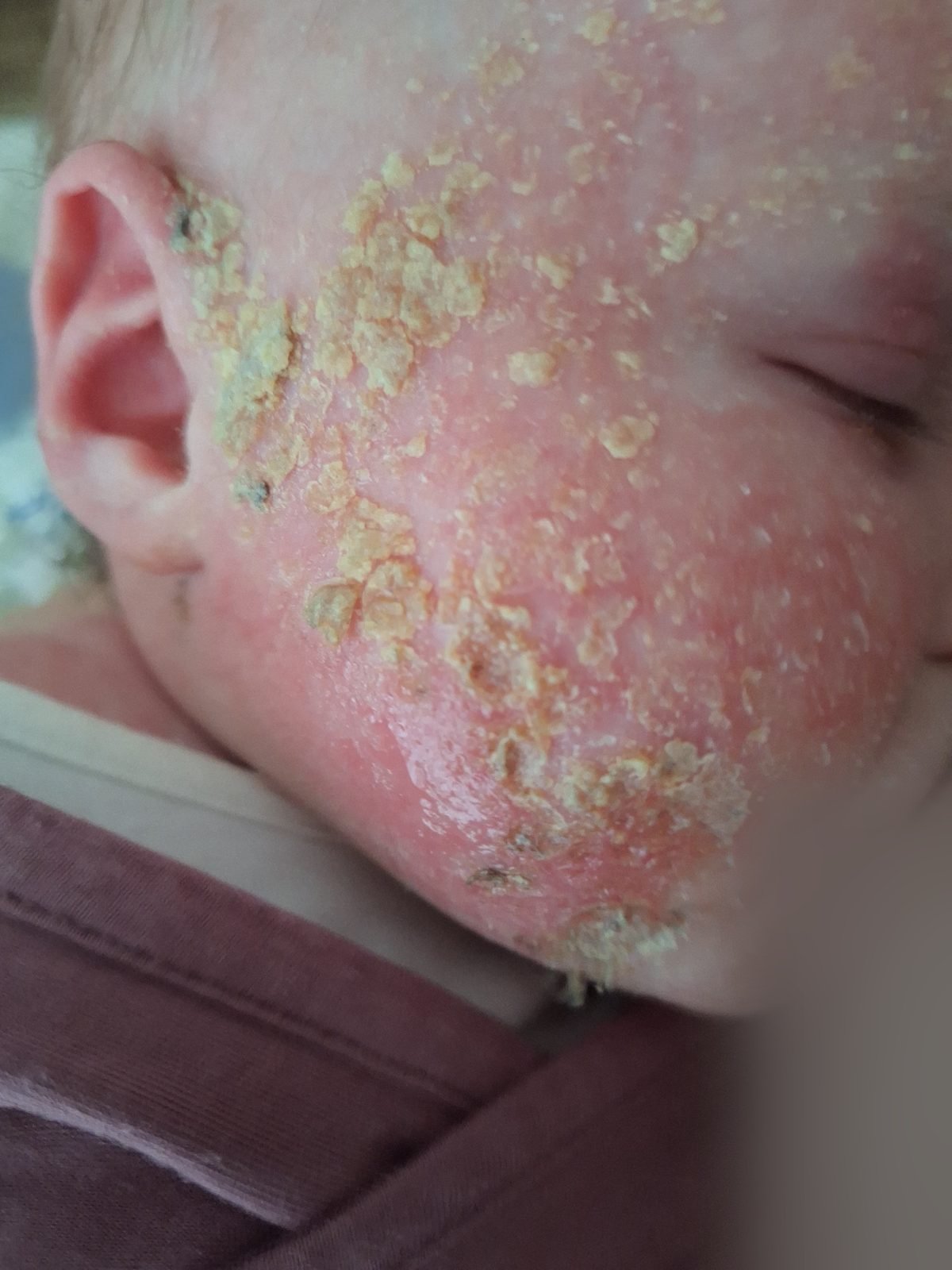
Intake photograph
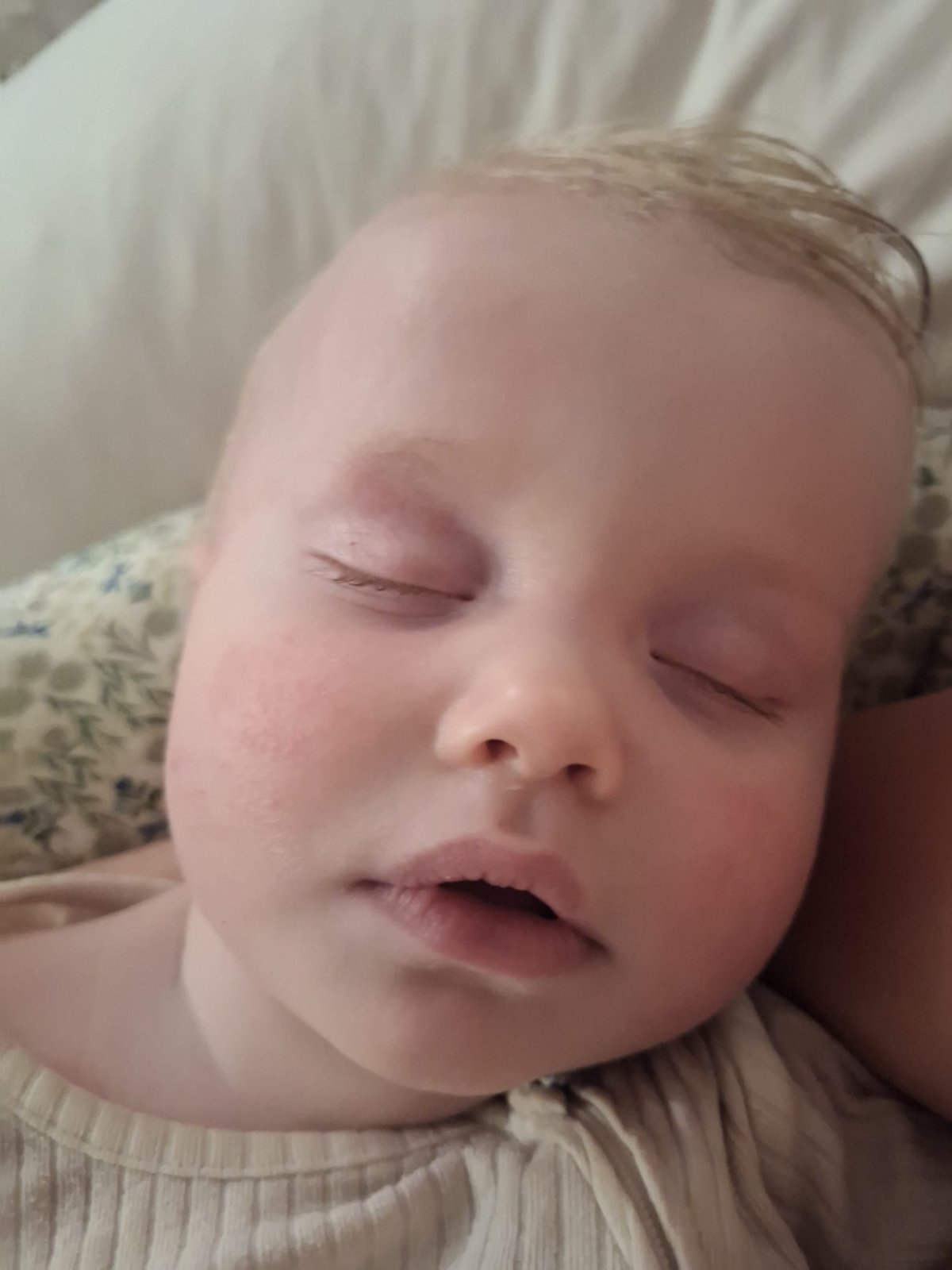
July 6, 2026
Poppy’s individual progress. Her July 9 review, about nineteen weeks after recorded intake, described functionally clear skin with brief heat-related flushing. This photograph does not establish the first date of clearance.
Read Poppy’s case historyParent photographs published with consent. Different angles and lighting; no skin or color retouching. Individual results vary.
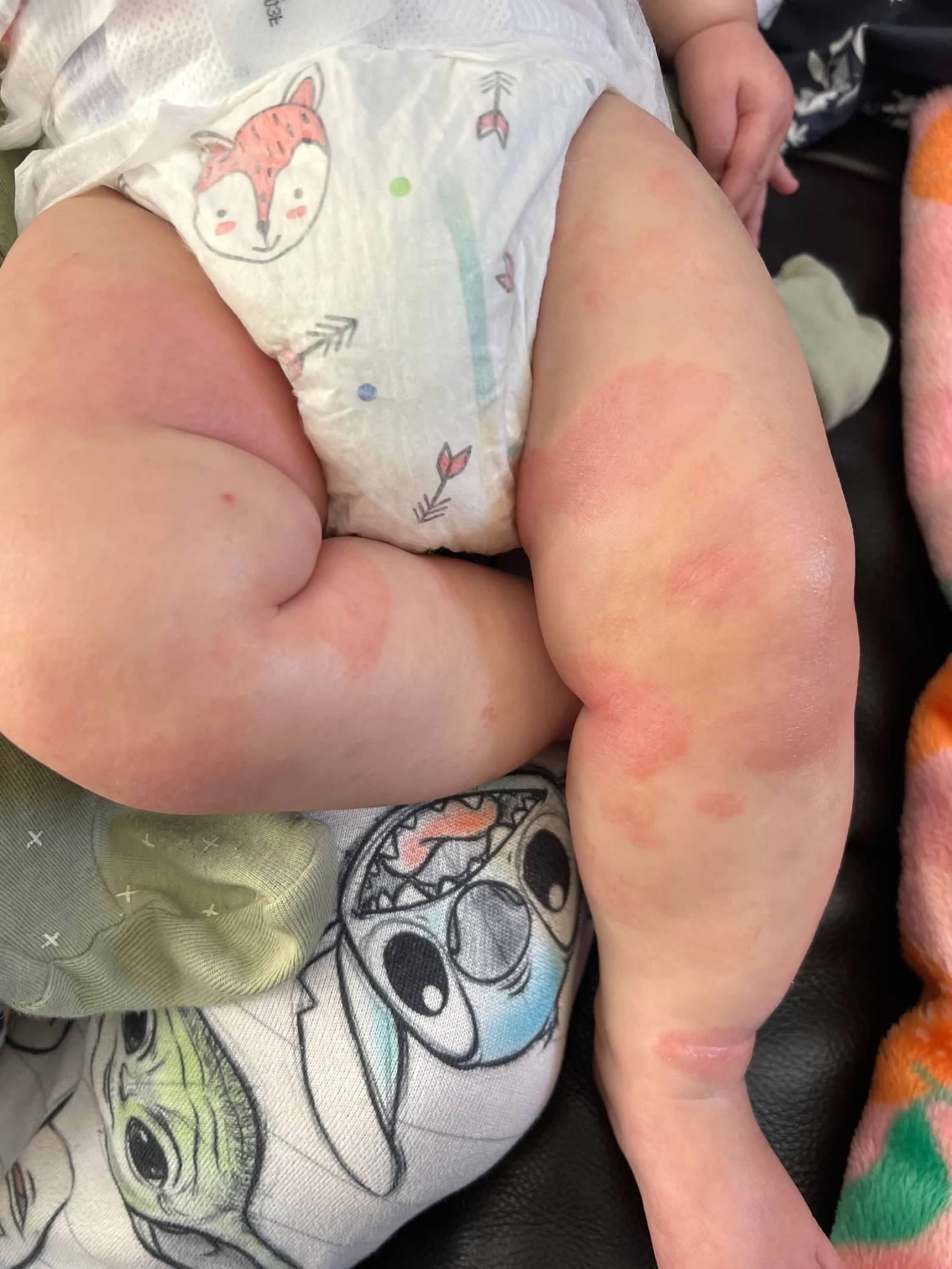
Intake photograph
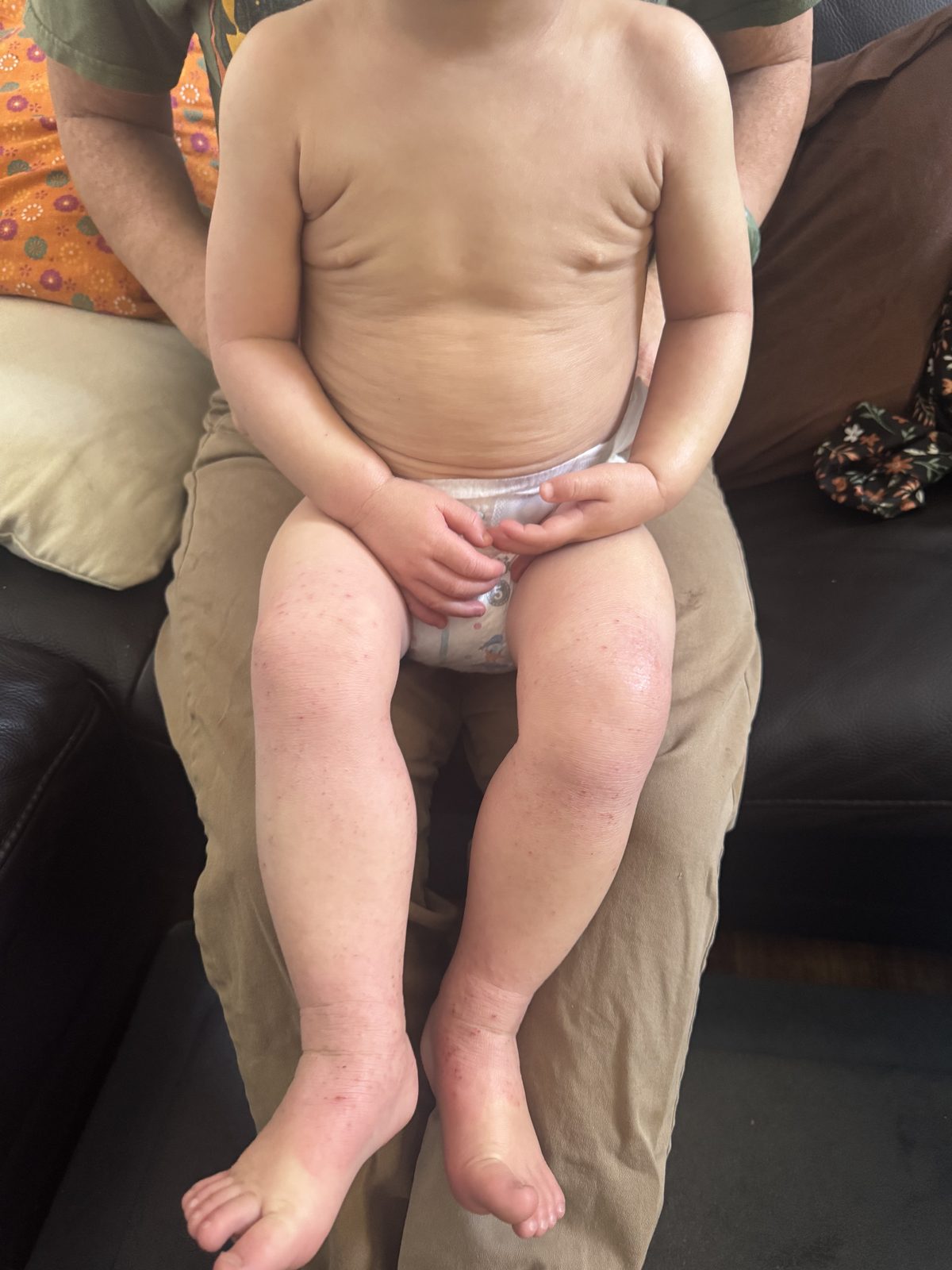
March 13, 2026
Leo’s legs at intake and during care. The March 13 photograph shows progress with patches still visible; it is not evidence of complete clearance on that date.
Read Leo’s case historyParent photographs published with consent. Different angles and lighting; no skin or color retouching. Individual results vary.
Chinese medicine has a developed approach to eczema
Chinese medicine has a long clinical tradition of examining itchy, inflamed skin conditions. It includes detailed pattern descriptions, treatment principles, herbal formulations and external care.
University clinics practice this approach today. The Chinese University of Hong Kong's integrative clinic describes an eczema service based on individual assessment. Its clinical framework distinguishes acute Heat and Dampness from chronic patterns involving deficiency and Dryness. [1]
Research has investigated Chinese herbal treatment too. In a placebo-controlled trial involving 85 children, a specific five-herb formula improved quality of life and reduced topical steroid use. Eczema-severity scores did not differ significantly between the groups. That is evidence about one formula and its measured outcomes, rather than proof that every herbal treatment works. [2]
I believe deeply in Chinese medicine. My own health experience changed the direction of my life, and the families I've helped are why I built EczemaBaby.
The way to examine that conviction is to look at the actual approach. What does it notice? How does it distinguish possibilities? How does the assessment change the treatment direction?
One eczema diagnosis can contain different TCM patterns
Imagine five children who all have eczema. Their skin may share features, yet their digestion, temperature, sleep, histories and changes over time can form different pictures.
Within Chinese medicine, those differences matter to treatment selection.
| Working TCM picture | Treatment principles considered within that framework |
|---|---|
| Heat and Dampness predominate | Clear Heat and resolve Dampness |
| Blood deficiency and Dryness predominate | Nourish Blood and moisten Dryness |
| Digestive-function deficiency accompanies inflamed skin | Support the deficient function while addressing the skin presentation |
| Several patterns coexist | Decide which principles belong together and what needs priority |
These are teaching examples, not a way to select your child's treatment from a table. The same observation can occur in more than one pattern, and a child can have a mixed presentation.
A pattern is a working interpretation of how the observations fit together. A serious assessment considers the details supporting it, the details that conflict with it and the other explanations still in contention.
The useful question becomes: Which treatment principles fit this child's whole presentation?
The skin
Appearance and change over time
Sleep and temperature
The context around the symptoms
Digestion and history
Details beyond the visible rash
One working TCM pattern
An explanation to investigate, understand and reassess.
Teaching illustration. No single symptom establishes a pattern.
Dry skin can coexist with Dampness
Leo's case makes this more concrete.
His skin was dry and flaky. His history also included bloating after meals, stools that varied in consistency and a puffy tongue with a white coating.
His working TCM assessment included Spleen Qi deficiency, Dampness, Heat and Blood Dryness.
The terminology needs some translation. In Chinese medicine, Spleen names a traditional functional system concerned with processing food and fluids. It does not mean a disease in the anatomical spleen. Blood Dryness is also a traditional pattern term, rather than a diagnosis established by a blood test.
For Leo, the skin's dryness did not make the digestive observations irrelevant. Dampness in the broader interpretation did not require every patch to be wet.
The assessment could therefore consider supporting digestive function and resolving Dampness alongside attention to Heat and Dryness. Reducing the picture to "dry eczema" would leave important observations unexplained.
That is the depth I want parents to understand when I talk about precision.
Root, branch and the garden analogy
Chinese medicine distinguishes the root from the branch. The branch is the current expression, such as inflamed, itchy skin. The root is the underlying traditional pattern being investigated.
A treatment plan may need to address both, with priorities changing as the child responds.
The garden analogy helps explain this attention. When leaves are struggling, a gardener looks at the leaves and investigates the soil, water and growing conditions. The visible problem matters. So do the conditions around it.
That is an analogy for whole-person assessment, rather than a claim that a traditional pattern is a measured biomedical cause. It also does not make skin care irrelevant. Internal treatment and external care can have different roles in the same plan.
Look at the leaves.
Visible skin symptoms and comfort
Investigate the conditions.
History, digestion, sleep and the wider presentation
A garden analogy for whole-person assessment, not a physiological model.
What a useful follow-up question actually does
Consider a fictional teaching example.
Two children have red, wet patches. One parent also reports loose stools and bloating that began before the current flare. The other reports consistently comfortable, regular digestion.
Those answers give us different reasons to investigate a digestive-function pattern. They do not settle either child's diagnosis.
The next questions should help resolve the remaining possibilities. Did the symptoms change together? Which came first? What would support or weaken the current explanation?
This is why a long questionnaire is not automatically a deep assessment. The questions need to help distinguish something, and the explanation needs to use the answers.
If you've already tried holistic care, you may reasonably want to know what would be different this time. Look for reasoning you can examine. Ask what the assessment learned about your child and why that changes the direction being considered.
Why an engineer built EczemaBaby
After studying systems engineering at the University of Florida, I worked in software at SpaceX and in machine learning engineering.
I was also burnt out and chronically tired. I relied on Adderall to do my software work. My joints were stiff, and I struggled with carpal tunnel.
I had tried conventional care, functional medicine and blood tests. In my experience, I still lacked a path back to feeling well.
Then an herbalist explained my exhaustion through the Chinese medicine concept of kidney jing. He used the analogy of a battery reserve I kept drawing on as though it were unlimited. That traditional explanation gave me a way to understand my health that I hadn't encountered before.
I followed his advice, took the herbs he recommended and changed my diet, including bringing more meat and bone broth into it.
About a year later, I had more energy and felt more emotionally steady. I no longer needed Adderall to do my job. I felt more connected to my heart and to the work I wanted to do.
That is my experience over time, with several changes together. It is why I wanted to use my engineering skills for this work.
I went on to build functional-medicine AI at HealthcareAgents.com in San Francisco. During a ten-day Vipassana retreat, I decided to go all in on bringing Chinese medicine and AI together.
An interview built to investigate the differences
The EczemaBaby interview uses your child's story and answers to investigate plausible Chinese medicine patterns. It asks follow-up questions intended to distinguish them and can reconsider the picture as new answers arrive.
Its depth should be visible in the work it does. A question about digestion needs a reason. A follow-up should respond to what you said. The resulting explanation should connect the working assessment to the observations supporting it.
You bring what you have noticed. You do not need to learn Chinese terminology or arrive with a complete explanation.
I want you to receive an assessment you can understand and ask questions about. A complicated label without an explanation leaves too much for you to work out alone.
Assessment begins the process; care carries it forward
The wider process moves through assessment, practical care and reassessment.
First, understand the pattern. Gather the story, distinguish the possibilities and explain the working interpretation.
Then, in personalized care, build a practical plan. Foods, herbs, topicals and daily steps need reasons that fit the individual case. The family needs to understand how to begin and what to do when a step is difficult.
Finally, observe and refine. Follow the skin, itching, sleep, what the family has been able to carry out and new changes. Reconsider the direction when the picture calls for it.
Poppy's care included adjustments. One proposed herbal step was not well tolerated by her mother, so the plan changed. Later, restrictive dietary steps that were difficult to sustain needed another look.
The assessment gives direction. Implementation and continuing attention matter too.
Your free first step includes the full interview and assessment
I'm offering the full, in-depth EczemaBaby pattern interview and assessment for free, including the resulting explanation and educational AI chat.
You can ask about the pattern's meaning, why an observation matters and how the different parts fit together. You can experience this assessment before deciding whether to purchase personalized care.
We start with a free thirty-minute conversation. I'll hear what's happening, explain the process and help you get started in the app. You don't need to complete a full app interview before speaking with me.
The assessment may continue after the call. Thirty minutes is the length of our first conversation, rather than a promise to complete every assessment step within it.
If personalized care looks relevant, I'll explain that paid option on the same call. The personalized treatment protocol and ongoing care are separate from the free assessment and educational chat. You do not have to buy a treatment program to receive the free experience.
Begin with your child's story
Another mother described what her family was getting back during care:
"Every day we get more of our little boy back."
That is the life behind this work. A child comfortable enough to play. Better nights. Energy and attention left for the rest of the family.
If you want help investigating your child's individual picture, choose an available time for a free conversation. Bring what has been happening, what you've tried and the questions you want answered.
Book your free thirty-minute conversation with Weston.
We'll discuss the approach and help you begin the full free AI assessment. You can decide about paid care after understanding what is offered.
References
- Chinese University of Hong Kong Integrative Medical Centre: Chinese Medicine Treatment for Eczema. A university clinic's description of its approach; no endorsement of EczemaBaby is implied.
- Hon and colleagues: Efficacy and tolerability of a Chinese herbal medicine concoction for treatment of atopic dermatitis. Randomized study of a specific formula in 85 children. The findings do not establish the efficacy of EczemaBaby's AI assessment.
30 minutes with Weston. Choose an available time; Weston calls the number you enter. Personalized treatment and ongoing care are optional paid services.
EczemaBaby.ai content is educational and does not replace care from your child's pediatrician. Nothing here is a diagnosis or a prescription.